Can AI smell prostate cancer before doctors can see it?
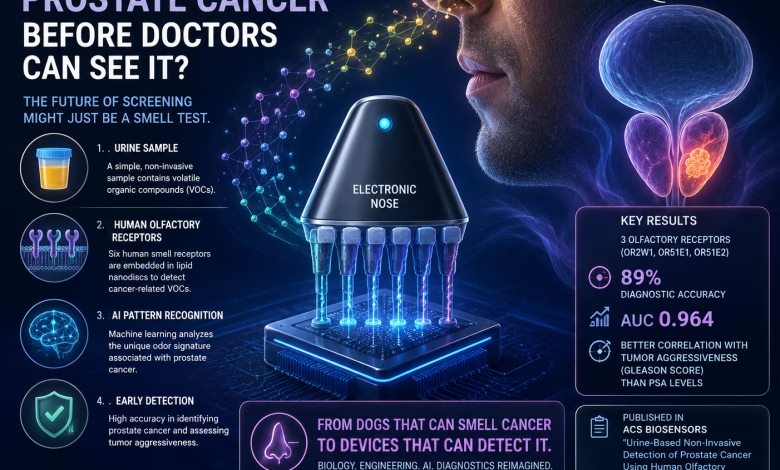
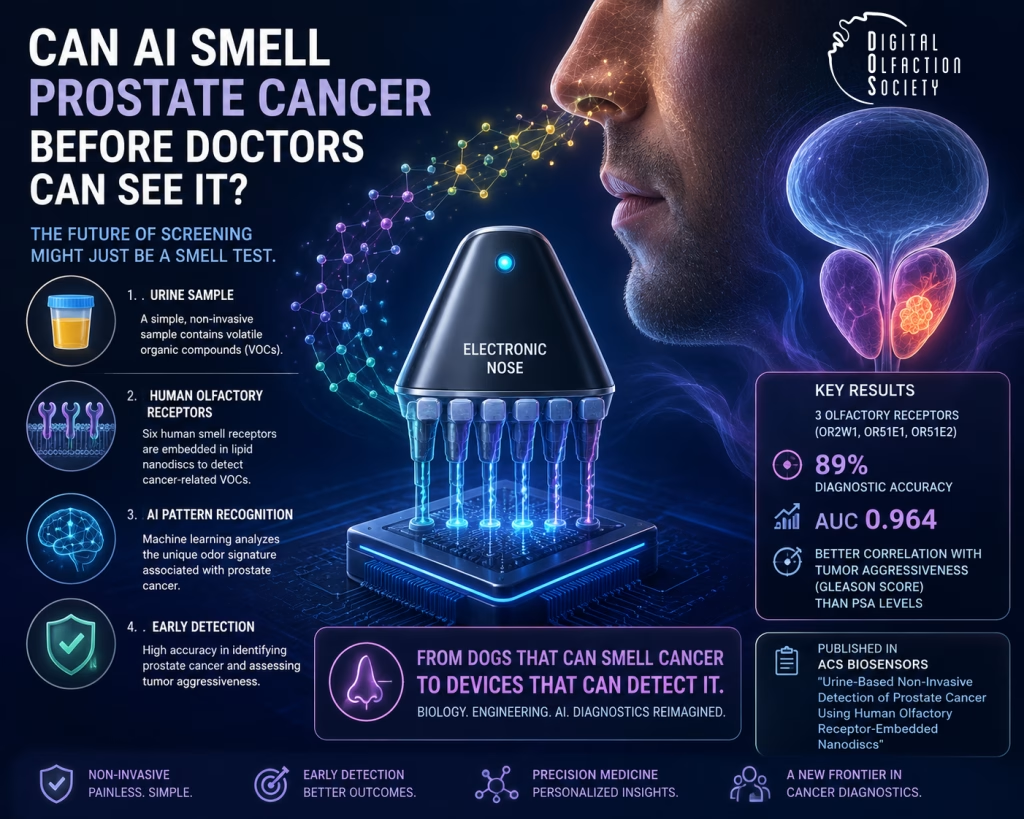
Researchers in South Korea have developed an artificial “electronic nose” that detects prostate cancer from a simple urine sample by combining human olfactory receptors with artificial intelligence. The technology could offer a painless and non-invasive alternative to conventional screening approaches.
The study was led by Prof. Koo Kyo-chul and Prof. Park Tai-hyun.
Instead of relying on PSA levels alone, the platform analyzes volatile organic compounds (VOCs) released in urine by prostate tumors. Researchers incorporated six human smell receptors into lipid nanodiscs and combined their signals with machine-learning algorithms capable of recognizing cancer-specific odor patterns.
In a cohort expanded to 290 urine samples, three olfactory receptors – OR2W1, OR51E1 and OR51E2 – achieved an impressive diagnostic performance, reaching an accuracy of 89% and an AUC of 0.964. Interestingly, the olfactory signatures correlated more closely with tumor aggressiveness (Gleason score) than conventional PSA measurements.
The findings were published in ACS Biosensors under the title “Urine-Based Non-Invasive Detection of Prostate Cancer Using Human Olfactory Receptor-Embedded Nanodiscs.”
Read the full news
Read the news on LinkedIn