Could Gas Sensors Be Calibrated with Fewer Experiments?
Ana Solorzano - Minimax Viking Products GmbH, Germany | Research with IBEC and the University of Barcelona

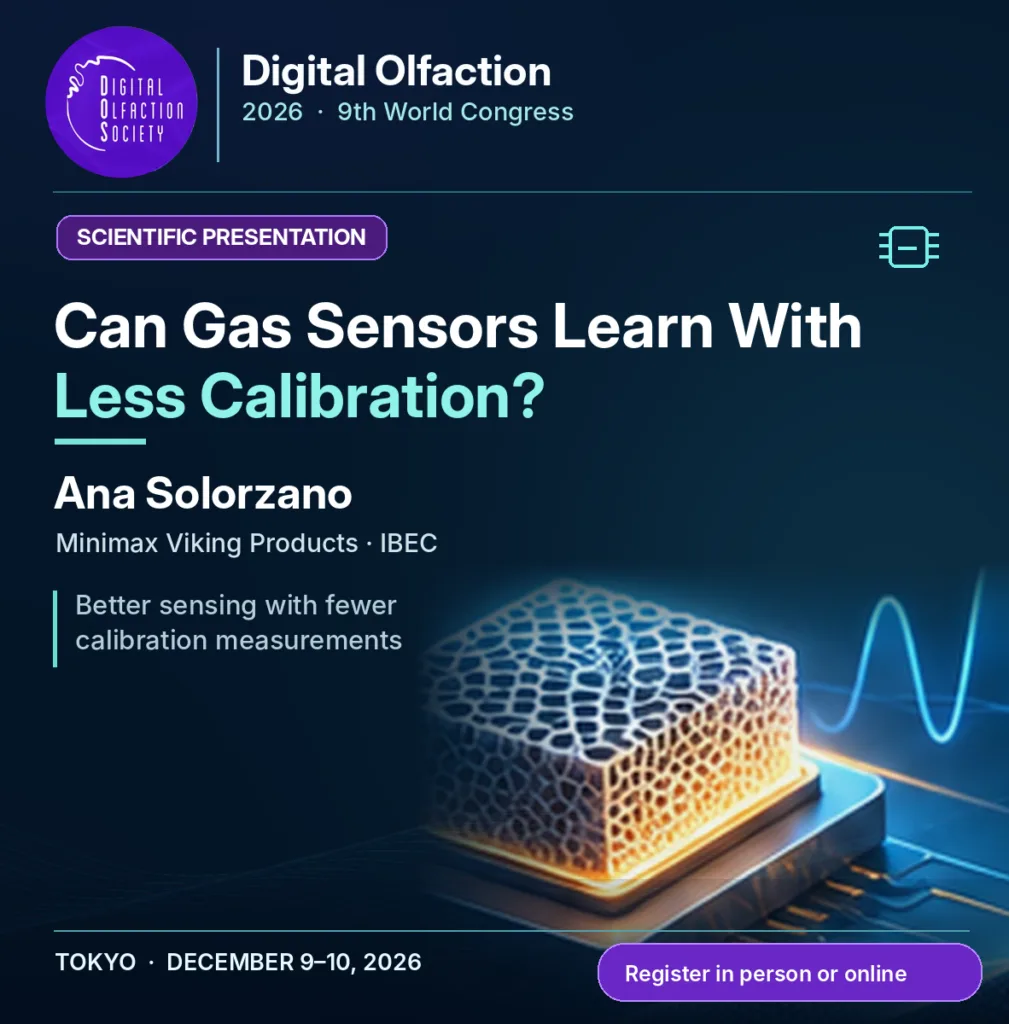
Calibrating a gas sensor requires measurements across different concentrations and environmental conditions. Could modelled responses help fill the gaps when experimental data are limited?
Ana Solorzano will address this question at DOS 2026 through a study of 14 temperature-modulated metal-oxide sensors.
Working with colleagues at IBEC and the University of Barcelona, she evaluated models trained to reproduce the sensors’ dynamic responses. The study used nine days of calibration data and four days of testing, progressively withholding measured carbon monoxide concentration levels and replacing them with modelled responses.
The gains were strongest when few measured concentration levels remained. Under the widest calibration gap tested, the FIS sensor group’s prediction error fell from 4.47 to 2.17 ppm, measured as RMSE.
The findings suggest a way to strengthen calibration datasets when measurements are scarce, with the potential to reduce experimental demands.
Explore the research at Digital Olfaction 2026, Tokyo, 9–10 December 2026.
For more Information
Read the news on LinkedIn