Can We Decode the Biological Language of Perfume?
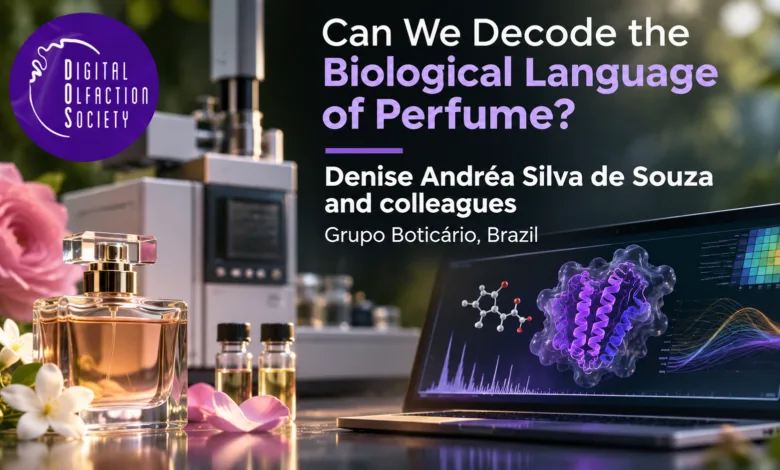
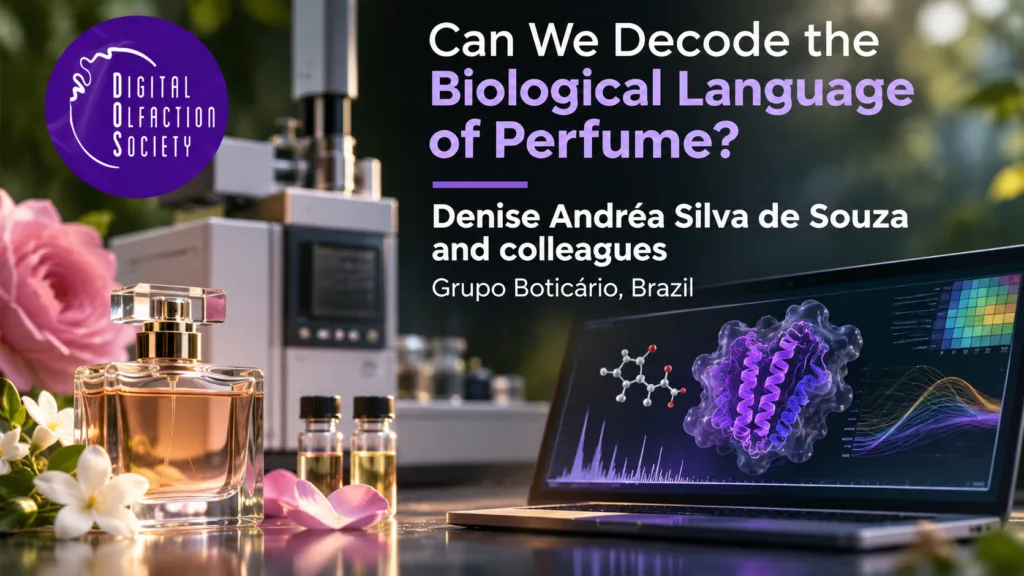
Researchers at Grupo Boticário are mapping how fragrance molecules activate human olfactory receptors, bringing data science closer to the biology of scent perception.
Why does a fragrance smell floral, musky or woody? And can we begin to understand these sensations by looking at the biological receptors activated by individual molecules?
For centuries, perfumery has combined chemistry, creativity and human sensory expertise. Today, researchers are exploring how biological data and computational models could add another dimension to fragrance design.
A research team from Grupo Boticário in Brazil has investigated the molecular architecture of fragrances by connecting their chemical composition with the activation of human olfactory receptors.
The scientists analysed 20 fragrances using gas chromatography and mass spectrometry combined with olfactory detection. They then examined receptor activation using laboratory-based screening and organised the resulting relationships into a computational network.
The study identified activation of 48 distinct human olfactory receptors. Its network analysis revealed that floral scent families occupied a central position, while certain receptors appeared to respond to a broad range of chemical signals. Others showed more specialised relationships, particularly within the musk category.
These findings suggest that fragrance perception can be investigated not only through the properties of individual molecules but also through the complex biological networks connecting molecules, receptors and olfactory families.
The work does not mean that scientists can fully predict how a person will experience a perfume. Human smell perception remains highly complex, involving receptor biology, neural processing and individual variability.
However, the research offers a potentially valuable framework for understanding how fragrance ingredients interact with biological targets.
For the fragrance and cosmetics industries, such approaches could eventually support more systematic ingredient selection and biologically informed formulation strategies.
At Digital Olfaction 2026, this research raises an intriguing possibility: could the future of perfumery combine artistic creativity with a deeper understanding of the biological code of smell?
Research: Denise Andréa Silva de Souza and colleagues — Research & Development, Grupo Boticário, Brazil.
Digital Olfaction Society 2026 | Tokyo, Japan | December 9–10, 2026