
Can Digital Olfaction Help Us Understand What Happens to Stored Carbon?
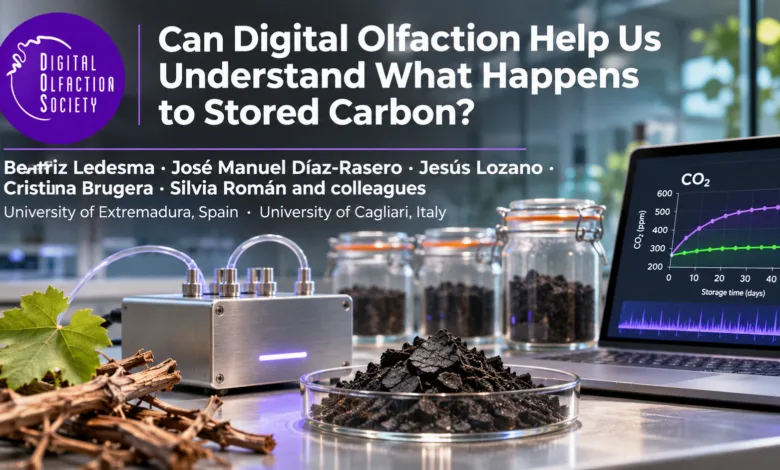
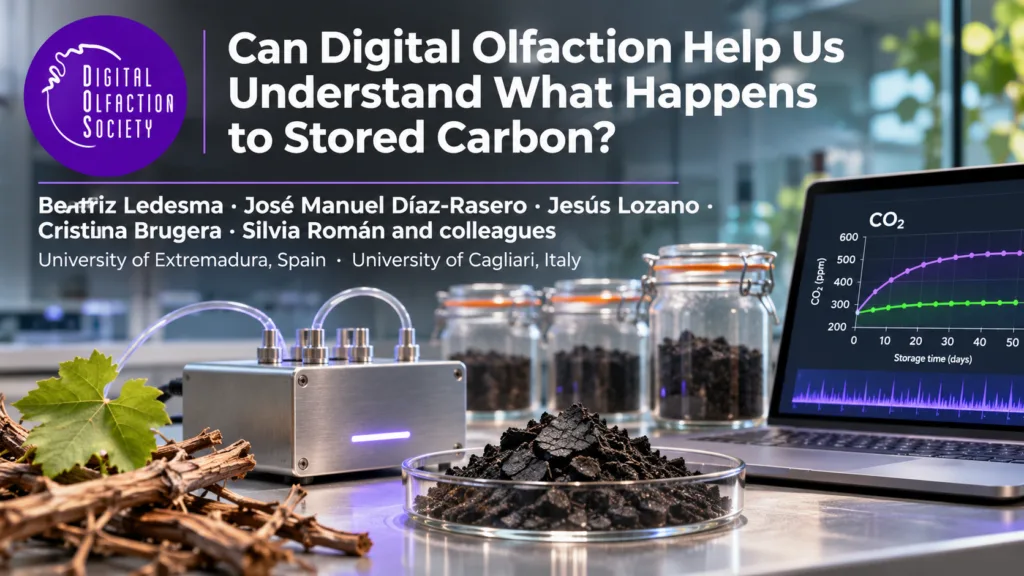
Scientists are investigating whether continuous chemical sensing could provide new ways to monitor carbon-rich materials and assess their stability over time.
As efforts to reduce atmospheric carbon dioxide intensify, increasing attention is being paid to materials capable of retaining carbon over long periods.
One such material is hydrochar, a carbon-rich product obtained by processing biomass under elevated temperature and pressure in the presence of water.
But producing carbon-rich materials is only part of the challenge. Understanding how they behave during storage, including whether they release carbon dioxide, is essential when evaluating their potential contribution to carbon management.
Researchers from the University of Extremadura in Spain and the University of Cagliari in Italy are investigating whether digital olfaction technologies could help monitor these changes.
Their study focuses on hydrochar produced from grapevine pruning residues. Samples were stored at different temperatures, while the researchers compared continuous gas-sensor measurements with gas chromatography and analyses of the material’s chemical and physical properties.
Preliminary gas chromatography results showed that carbon dioxide concentrations increased mainly during the early stages of storage, particularly at higher temperatures.
After 50 days, several measured properties of the hydrochar showed no remarkable changes. The researchers are continuing to examine how continuous sensor responses relate to the gas chromatography measurements.
This distinction is important. The study has not yet established that digital olfaction can reliably replace conventional analytical techniques for monitoring hydrochar stability.
However, continuous chemical sensing could eventually complement laboratory methods by providing more frequent information about changes occurring during storage.
The potential applications extend beyond a single material. Better monitoring approaches may become valuable for evaluating carbon-rich products and improving our understanding of their environmental performance.
At Digital Olfaction 2026, this research illustrates how technologies developed to detect chemical signatures could contribute to broader environmental monitoring challenges.
Research: Beatriz Ledesma, José Manuel Díaz-Rasero, Jesús Lozano, Cristina Brugera, Silvia Román and colleagues — University of Extremadura, Spain; University of Cagliari, Italy.
Digital Olfaction Society 2026 | Tokyo, Japan | December 9–10, 2026